

Travel insurance for cancer patients is possible to find, but it requires careful planning. Many standard travel insurance policies exclude pre-existing medical conditions, meaning cancer-related claims may not be covered unless the condition is declared and accepted by the insurer.
Travel insurance for cancer patients provides financial protection for eligible travelers with a cancer diagnosis, previous treatment, or remission history. Coverage depends on factors such as cancer type, treatment status, medical history, destination, trip length, and the insurer’s underwriting process.
For someone living with cancer, recovering from treatment, or supporting a family member who is traveling, the biggest questions are usually:
- Can cancer patients get travel insurance?
- Will cancer affect the insurance premium?
- Does travel insurance cover cancer-related emergencies?
- Which companies provide coverage for pre-existing medical conditions?
- What happens if cancer symptoms return during a trip?
The answer depends on your individual circumstances, but understanding how the process works can help you choose appropriate protection and avoid unexpected problems abroad.
What Is Travel Insurance for Cancer Patients?
Travel insurance for cancer patients is a specialized type of travel medical insurance designed for people who have a current or previous cancer diagnosis.
Unlike basic travel insurance, specialist policies usually involve medical screening and underwriting. The insurer reviews your medical history to determine:
- Whether coverage is available
- What conditions are included or excluded
- How much the premium will cost
- What level of medical protection is provided
Cancer is generally treated as a pre-existing medical condition, which means travelers usually need to disclose their diagnosis, treatment history, medications, and current health status.
Failing to disclose cancer history can result in denied claims if a medical issue occurs during the trip.
Can Cancer Patients Get Travel Insurance?
Yes, many cancer patients can obtain travel insurance, but approval depends on personal medical circumstances and insurer rules.
Insurance companies usually consider:
- Type of cancer
- Stage of cancer
- Date of diagnosis
- Current treatment status
- Recent surgeries
- Chemotherapy or radiotherapy history
- Remission status
- Planned destination
- Length of travel
Someone who completed treatment several years ago may have different options compared with someone currently receiving chemotherapy.
Why Normal Travel Insurance May Not Be Enough for Cancer Patients
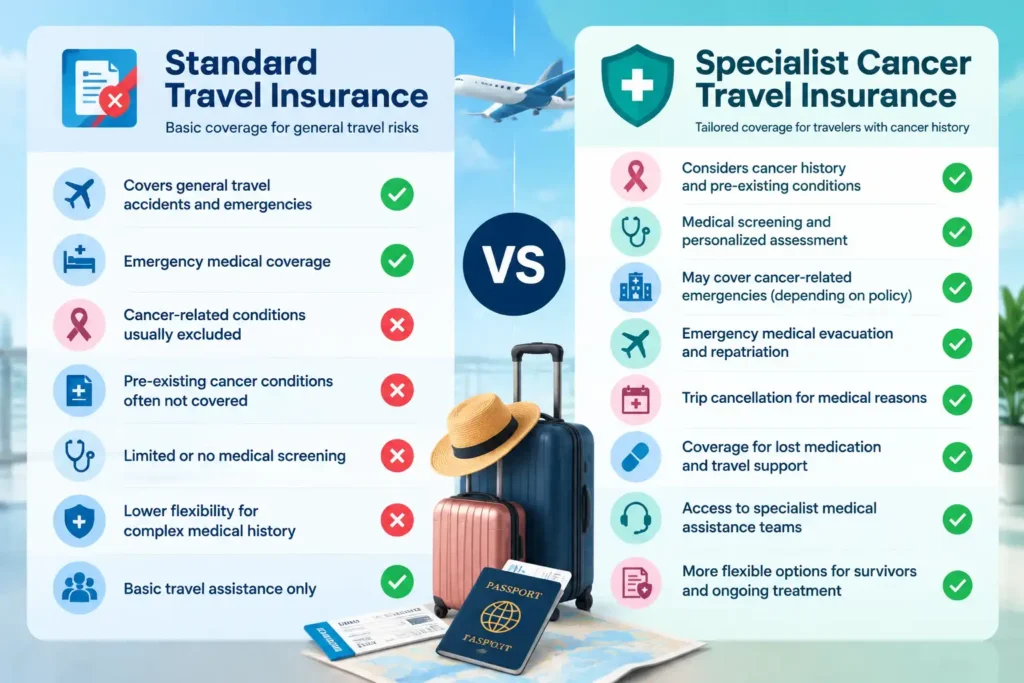
Many standard travel insurance policies provide emergency medical coverage but exclude known medical conditions.
For example:
| Situation | Standard Travel Insurance | Specialist Cancer Travel Insurance |
|---|---|---|
| General travel accident | Usually covered | Covered |
| Cancer-related emergency | May be excluded | May be included after assessment |
| Pre-existing cancer condition | Often excluded | Considered during underwriting |
| Medical screening | Sometimes limited | Usually required |
| Personalized coverage | Limited | More flexible |
The main difference is that specialist insurers evaluate your medical situation instead of automatically excluding cancer-related risks.
Who Needs Cancer Travel Insurance?
This type of insurance may be relevant for:
People Currently Receiving Cancer Treatment
Travelers undergoing:
- Chemotherapy
- Radiotherapy
- Immunotherapy
- Other oncology treatments
may need specialist advice before traveling.
Cancer Survivors
People who completed treatment and are in remission may still need to declare:
- Previous diagnosis
- Treatment history
- Follow-up care requirements
Cancer survivor travel insurance can help travelers find policies that consider their previous condition.
If you also have other health conditions, our UK guide to travel insurance with medical conditions explains how insurers assess them together.
Family Members Traveling With a Cancer Patient
Families often need coverage that protects against:
- Trip cancellation
- Emergency medical situations
- Unexpected changes in health
- Travel disruption
Patients Traveling for Medical Care
Some travelers go abroad for:
- Specialist consultations
- Cancer treatment
- Clinical trials
- Medical procedures
Medical travel insurance requirements can differ from normal holiday insurance.
This overlaps closely with how insurers treat other pre-existing medical conditions, where similar screening and disclosure rules apply.
What Does Travel Insurance for Cancer Patients Cover?
Coverage varies between providers, but policies may include:
Emergency Medical Expenses
This can help with unexpected healthcare costs during travel, such as:
- Hospital treatment
- Emergency consultations
- Diagnostic procedures
- Ambulance services
Healthcare costs abroad can be extremely expensive, especially in countries such as the United States.
Medical Evacuation
Medical evacuation coverage helps arrange transportation if you need specialized treatment unavailable at your destination.
Examples:
- Transfer to a suitable hospital
- Emergency transportation home
- Coordination with medical assistance teams
Repatriation
Repatriation coverage may help return a traveler to their home country if medically necessary.
Trip Cancellation Protection
Cancer-related policies may offer cancellation protection if:
- Your condition changes before travel
- Your doctor advises against travel
- Treatment schedules change
Always check the exact policy wording because exclusions differ.
Lost Medication and Travel Assistance
Some policies may provide assistance for:
- Lost medication
- Emergency support
- Travel arrangements
- Medical coordination
What Cancer Travel Insurance Usually Doesn’t Cover?
Every policy has exclusions. Common examples include:
- Undeclared medical conditions
- Routine cancer treatment abroad
- Experimental treatments
- Planned medical procedures
- Certain advanced conditions
- Travel against medical advice
Always read the policy documents carefully before purchasing.
How to Get Travel Insurance With Cancer: Step-by-Step Process
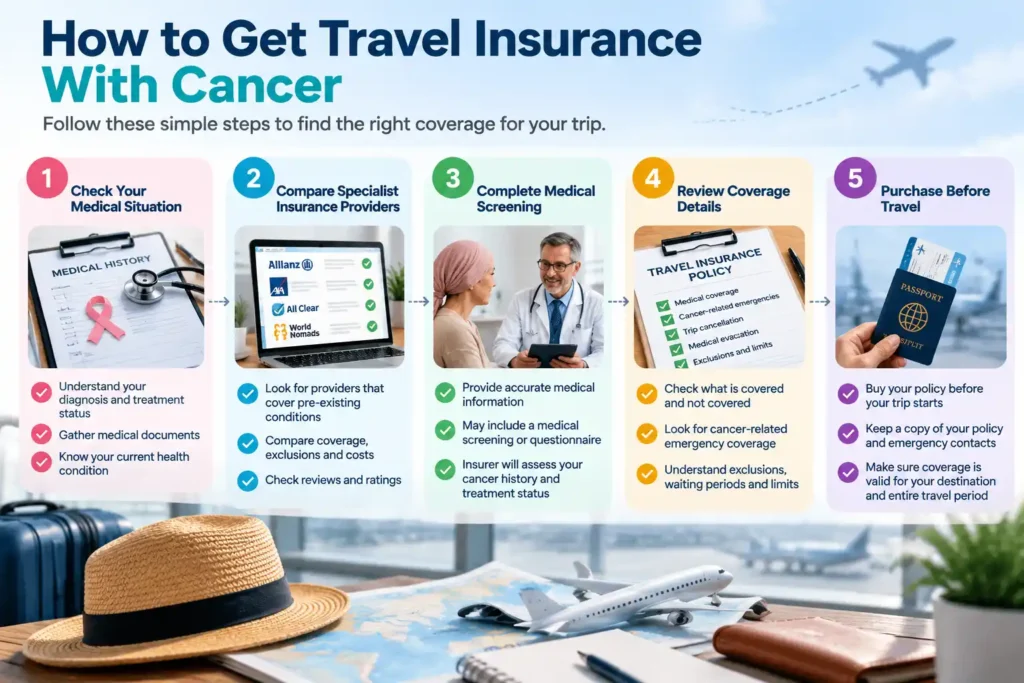
Step 1: Check Your Medical Situation
Before comparing policies, collect:
- Cancer diagnosis details
- Treatment history
- Medication list
- Doctor information
- Current health status
Step 2: Compare Specialist Insurance Providers
Look for providers experienced with:
- Pre-existing medical conditions
- Cancer history
- Oncology-related travel risks
Do not compare only by price. A cheaper policy may provide limited cancer-related protection.
Step 3: Complete Medical Screening
Most specialist insurers ask medical questions such as:
- What type of cancer was diagnosed?
- When were you diagnosed?
- Are you receiving treatment?
- Are you in remission?
- Have you had recent surgery?
Answer honestly and completely.
Step 4: Review Coverage Details
Before buying, check:
- Medical coverage limits
- Cancer-related exclusions
- Emergency assistance
- Cancellation rules
- Claim requirements
Step 5: Purchase Before Travel
Buying early can provide additional protection for cancellation-related situations.
How Much Does Travel Insurance for Cancer Patients Cost?
There is no fixed price because premiums depend on personal risk factors.
The main factors affecting cost include:
| Factor | Why It Matters |
|---|---|
| Age | Older travelers often have higher premiums |
| Cancer type | Different conditions carry different risk assessments |
| Treatment status | Active treatment may affect availability |
| Destination | Healthcare costs vary worldwide |
| Trip duration | Longer trips increase exposure |
| Coverage amount | Higher limits may increase premiums |
A quote should always be based on your individual medical assessment.
For a general cost estimate based on age and trip length, try our travel insurance cost calculator.
Choosing the Right Cancer Travel Insurance: Decision Framework
Before purchasing, ask these questions:
Are You Currently Receiving Treatment?
Yes
Consider specialist insurers and discuss travel plans with your healthcare provider.
No
You may have more insurance options, but your cancer history still needs to be disclosed.
Are You Traveling to a High-Cost Healthcare Country?
Examples:
- United States
- Canada
- Australia
Higher healthcare costs make strong medical coverage especially important.
Are You Traveling to Europe?
European travelers should consider:
- Schengen visa requirements
- Existing healthcare agreements
- Destination healthcare systems
A policy that meets visa requirements may not always provide sufficient cancer-related protection.
Travel Insurance for Cancer Patients by Region
USA
Important considerations:
- Overseas healthcare costs can be very high
- Medicare generally has limited coverage outside the US
- Emergency evacuation can be valuable
Common searches:
- travel insurance for cancer patients USA
- cancer survivor travel insurance USA
- Medicare travel insurance cancer
UK
Travelers often search for:
- cancer travel insurance UK
- holiday insurance after cancer
- travel insurance with pre-existing conditions
Important considerations:
- NHS treatment does not automatically cover overseas healthcare
- Specialist insurers may assess cancer history individually
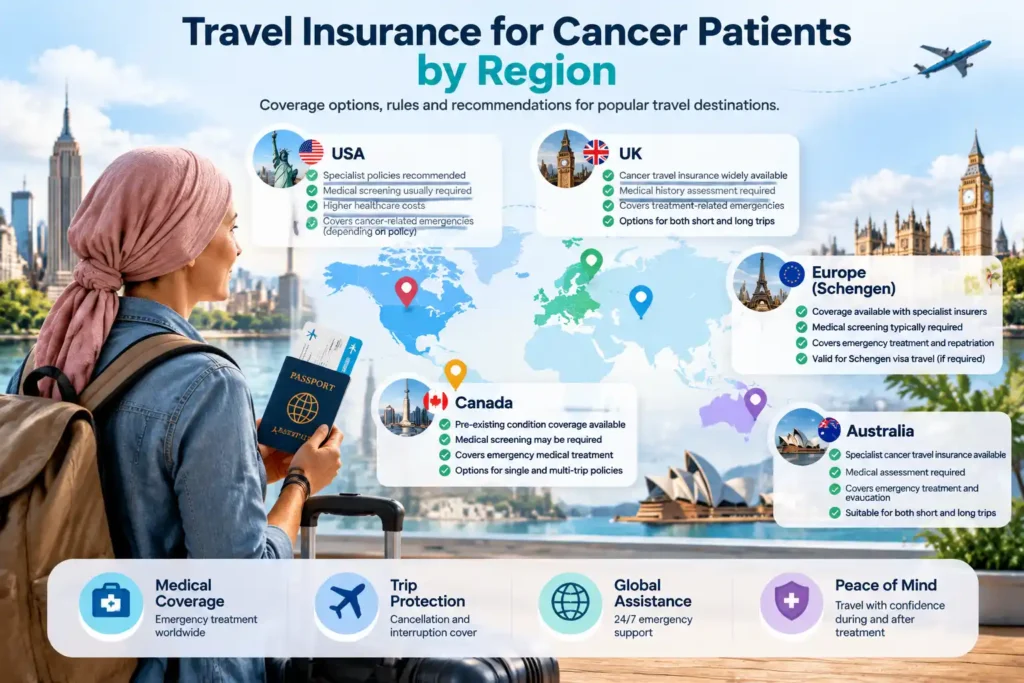
Canada
Canadian travelers should consider:
- Provincial healthcare limitations outside Canada
- Emergency medical costs abroad
- Coverage differences between provinces
Common search terms:
- travel insurance cancer patients Canada
- Canadian cancer survivor travel insurance
Europe and Schengen Countries
Travelers may need:
- Schengen-compliant insurance
- Medical coverage documentation
- Emergency assistance
Search examples:
- Schengen travel insurance cancer patient
- European travel insurance pre-existing conditions
Australia
Important considerations:
- Overseas healthcare expenses
- Long-distance travel risks
- Remote destination planning
Common Mistakes Cancer Patients Make When Buying Travel Insurance
1. Not Declaring Cancer History
This is one of the biggest risks.
An insurer may refuse a claim if the medical condition was not disclosed.
2. Choosing the Cheapest Policy Only
Low-cost insurance may have:
- Lower medical limits
- More exclusions
- Limited assistance services
3. Ignoring Policy Exclusions
Always check:
- Cancer-related exclusions
- Treatment limitations
- Destination restrictions
4. Buying Too Late
Last-minute purchases may not provide full cancellation protection.
Tips for Traveling Safely With Cancer and Travel Insurance
Before traveling:
- Speak with your oncologist
- Carry medication documentation
- Keep medical records available
- Research healthcare facilities at your destination
- Save emergency contact information
- Check vaccination and travel health requirements
Useful resources may include guidance from organizations such as the World Health Organization (WHO), Centers for Disease Control and Prevention (CDC), and national health services.
Cancer Travel Insurance Checklist
Before buying a policy, confirm:
✓ Cancer history declared
✓ Medical screening completed
✓ Emergency medical coverage included
✓ Medical evacuation reviewed
✓ Cancellation terms understood
✓ Destination requirements checked
✓ Policy exclusions reviewed
✓ Claim process understood
Frequently Asked Questions
Yes. Many insurers provide travel insurance for people with cancer, but eligibility depends on medical history, treatment status, cancer type, destination, and underwriting assessment.
Yes. Cancer is generally considered a pre-existing medical condition and should be disclosed when applying for coverage
Usually, travel insurance is designed for emergency situations rather than planned cancer treatment. Coverage depends on the specific policy terms.
Yes, some insurers may provide coverage after chemotherapy, but they may require details about treatment dates, recovery status, and medical approval.
It can be more expensive because insurers consider medical risk factors, but the final premium depends on individual circumstances.
Yes. Many cancer survivors can obtain holiday insurance after completing treatment, although they may still need medical screening.
The outcome depends on whether the condition is covered under the policy. This is why reviewing exclusions and medical coverage before traveling is important.
Some people with cancer travel internationally, but travel decisions should consider treatment schedules, medical advice, destination healthcare access, and insurance availability.
Conclusion
Travel insurance for cancer patients is not a one-size-fits-all product. The right policy depends on your cancer history, current health status, destination, and the level of protection you need.
The safest approach is to:
- Understand your medical situation
- Compare specialist insurance options
- Complete medical screening honestly
- Review exclusions carefully
- Choose coverage that protects against realistic travel risks
Whether you are undergoing treatment, recovering, or traveling after remission, the right preparation can make international travel more manageable and financially safer.
About the Author

Rahib Naqvi researches and writes about travel insurance for UK and international travellers, focusing on older travellers, pre-existing medical conditions and policy comparison. This website provides general educational information and does not sell insurance or provide personalised financial or medical advice. Policy terms and eligibility can change, so readers should confirm current information directly with the insurer before buying.