
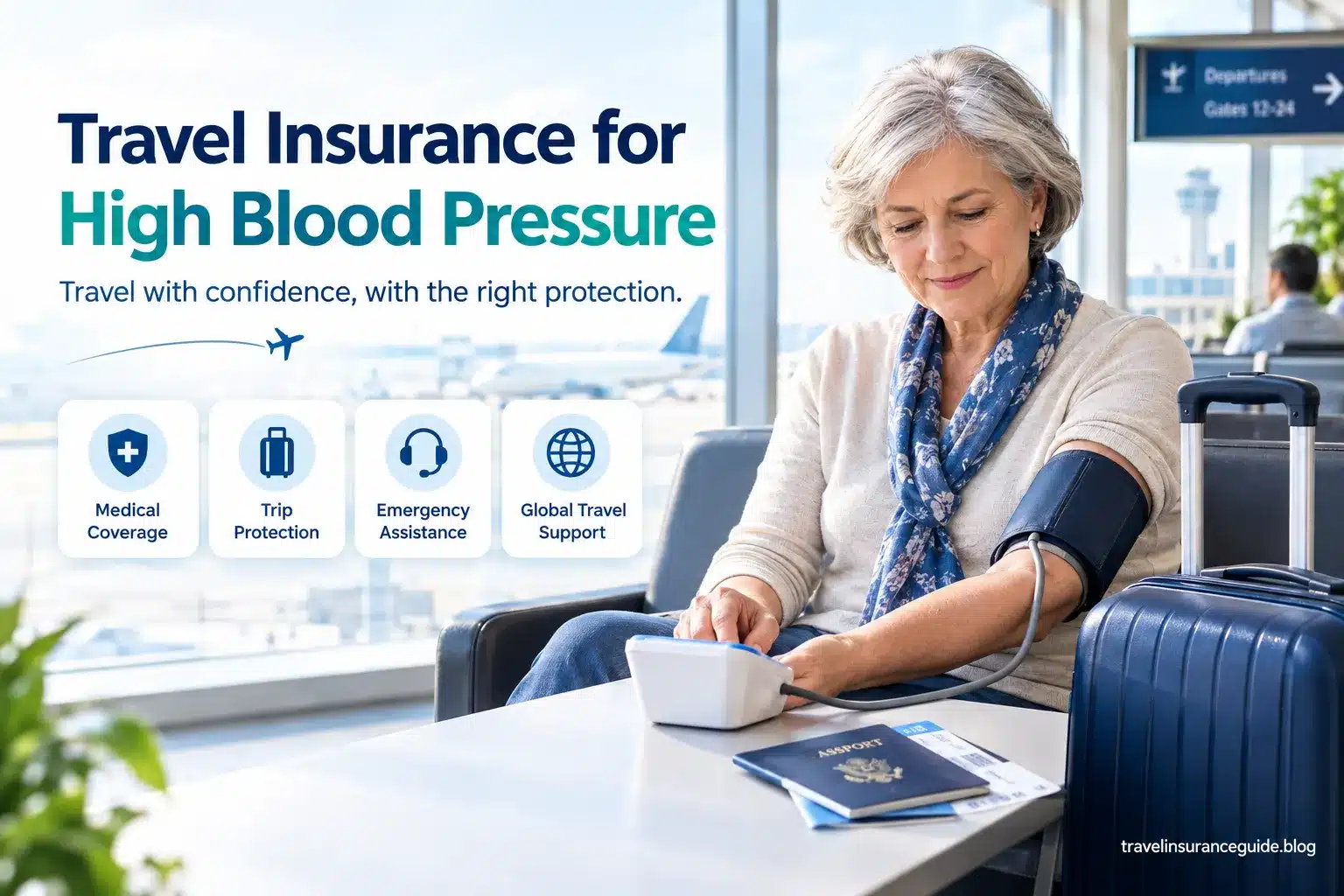
Travel insurance for high blood pressure is something millions of people need every year — having hypertension does not mean you have to stop traveling. People with high blood pressure travel internationally for holidays, family visits, business trips, and retirement adventures all the time.
However, finding the right hypertension travel cover requires more attention than purchasing a standard travel policy. Hypertension is commonly considered a pre-existing medical condition, which means you may need to declare it before buying insurance.”
Yes, people with high blood pressure can usually get travel insurance. Coverage depends on whether hypertension is controlled, medical history, medications, destination, age, and the insurer’s assessment of pre-existing conditions.
The main goal is to find a policy that provides suitable protection without unexpected exclusions when you need medical assistance abroad.
What Is Travel Insurance for High Blood Pressure?
Travel insurance for high blood pressure is a type of travel medical insurance designed for travelers who have hypertension or related health considerations.
Unlike basic travel insurance, these policies take your medical history into account through a process called medical underwriting.
The insurer may review:
- Your blood pressure control
- Current medications
- Previous medical complications
- Doctor consultations
- Related conditions such as heart disease or diabetes
- Planned travel destination
The purpose is not necessarily to prevent coverage but to determine what protection is suitable for your health situation.
Why Does High Blood Pressure Matter for Travel Insurance?
High blood pressure is often manageable with medication and lifestyle changes, but insurers consider possible complications that could occur during international travel.
Potential concerns include:
- Hypertensive emergencies
- Heart-related complications
- Stroke risk
- Hospital treatment abroad
- Medication problems during travel
Healthcare costs can vary significantly depending on where you travel.
For example:
- Medical care in the United States can be extremely expensive without proper insurance.
- European countries may have different healthcare agreements and visa requirements.
- Remote destinations may require stronger emergency assistance options.
This is why choosing appropriate coverage before departure is important.
Can You Get Travel Insurance With High Blood Pressure?
Yes, many travelers with hypertension can obtain travel insurance.
However, approval depends on individual circumstances rather than simply having the condition.
Insurance providers usually consider:
| Factor | Why It Matters |
|---|---|
| Blood pressure control | Shows whether your condition is stable |
| Medication use | Helps insurers understand treatment needs |
| Age | Older travelers may require additional assessment |
| Medical history | Previous complications affect risk evaluation |
| Destination | Healthcare costs differ worldwide |
| Trip duration | Longer trips may increase exposure |
Someone with controlled hypertension and regular medication may have different options compared with someone recently diagnosed or experiencing complications.
Is High Blood Pressure a Pre-Existing Condition?
Yes, hypertension is generally treated as a pre-existing condition by travel insurance providers.
A pre-existing condition means a health issue that existed before purchasing the policy.
Examples include:
- High blood pressure
- Diabetes
- Heart disease
- Asthma
- Previous medical diagnoses
When applying for insurance, travelers should provide accurate information about:
- Diagnosis date
- Medication
- Treatment history
- Related health conditions
Failing to disclose high blood pressure could create problems if you later make a claim related to your medical condition.
If you have other health conditions as well, our UK guide to travel insurance with medical conditions explains how insurers assess them together.
What Does Travel Insurance Cover for High Blood Pressure?
Coverage varies between providers, but policies may include several important protections.
Emergency Medical Expenses
This can help cover unexpected healthcare costs while traveling, including:
- Emergency hospital treatment
- Doctor consultations
- Diagnostic tests
- Ambulance services
For travelers with hypertension, emergency medical coverage is one of the most important parts of a policy.
Medical Evacuation
Medical evacuation coverage helps arrange transportation if you need medical care that is unavailable at your travel destination.
Examples:
- Transfer to a suitable hospital
- Emergency transportation home
- Coordination with medical assistance teams
This can be especially important when traveling to remote locations.
Trip Cancellation Coverage
Some policies may provide protection if a medical situation affects your travel plans.
Examples:
- A doctor advises against travel
- A sudden health change occurs before departure
- A medical emergency affects your ability to travel
Always review policy wording because cancellation rules differ between insurers.
Medication Assistance
Travelers with hypertension often need regular medication.
Some policies or assistance services may help with:
- Lost medication support
- Emergency medical guidance
- Finding healthcare services abroad
Before traveling, it is also recommended to carry medication in original packaging and keep prescriptions available.
Standard Travel Insurance vs Insurance for High Blood Pressure
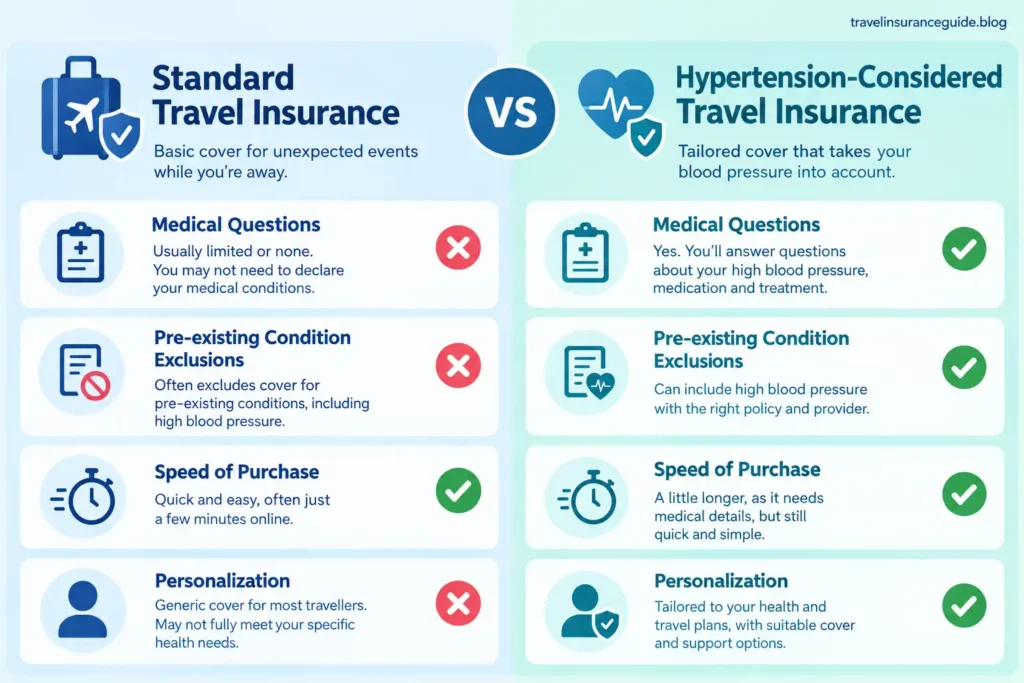
| Standard Travel Insurance | Travel Insurance Considering Hypertension |
|---|---|
| May ask fewer medical questions | Usually requires medical assessment |
| Pre-existing conditions may be excluded | Hypertension is reviewed individually |
| Faster online purchase | More detailed application process |
| Less personalized coverage | More suitable medical protection |
A cheaper policy is not always the best choice if it excludes your most important health risks.
How to Get Travel Insurance With High Blood Pressure
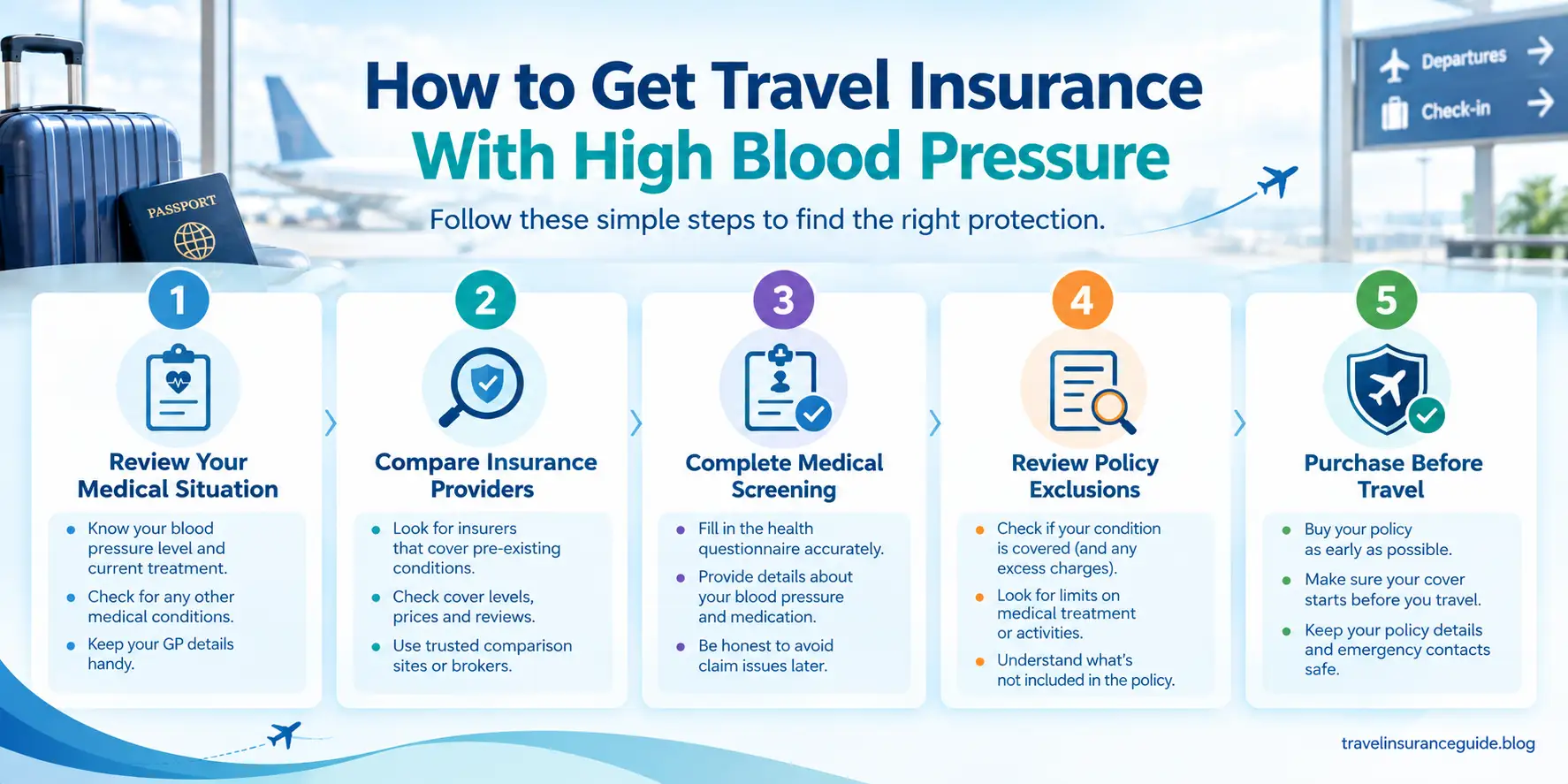
Follow these steps before purchasing a policy:
Step 1: Review Your Medical Situation
Prepare information about:
- Blood pressure diagnosis
- Current medication
- Recent health changes
- Previous complications
- Doctor advice
Knowing your medical details makes the application process easier.
Step 2: Compare Insurance Providers
Look for providers experienced with:
- Pre-existing medical conditions
- Hypertension coverage
- Senior travel insurance
- International medical assistance
Do not compare only prices. Review coverage limits and exclusions carefully.
Step 3: Complete Medical Screening
Many insurers ask questions about:
- Your hypertension history
- Medication
- Blood pressure control
- Other health conditions
Answer honestly because inaccurate information can affect future claims.
Step 4: Review Policy Exclusions
Before buying, check:
- Medical coverage limits
- Hypertension-related exclusions
- Emergency assistance services
- Claim requirements
- Destination restrictions
Step 5: Purchase Suitable Coverage Before Travel
Buying early gives you more time to understand your policy and prepare required documents.
How Much Does Travel Insurance for High Blood Pressure Cost?
There is no fixed price because insurance premiums are based on individual risk factors.
Factors that influence cost include:
| Cost Factor | Impact |
|---|---|
| Age | Older travelers may pay more |
| Blood pressure control | Stable conditions may have different pricing |
| Medication | Treatment requirements affect assessment |
| Previous complications | May influence availability and premium |
| Destination | Healthcare costs vary by country |
| Trip duration | Longer trips may increase cost |
| Coverage limits | Higher protection can increase premium |
A personalized quote is usually required because every traveler’s medical history is different.
Want a rough idea of what you might pay? Try our free travel insurance cost calculator to get a quick estimate based on your age and trip length.
Choosing the Right Policy: Decision Framework
If Your Hypertension Is Controlled
You may have more insurance options.
Consider:
- Standard providers with medical screening
- Specialist medical travel insurers
- Policies covering pre-existing conditions
If You Recently Diagnosed With High Blood Pressure
You may need:
- More detailed medical assessment
- Doctor consultation
- Specialist insurance providers
If You Are Over 60
Senior travelers often need additional consideration because age may combine with other health factors.
Look for policies that consider:
- Multiple medications
- Chronic conditions
- Emergency assistance
- Longer international trips
Travel Insurance for High Blood Pressure by Region
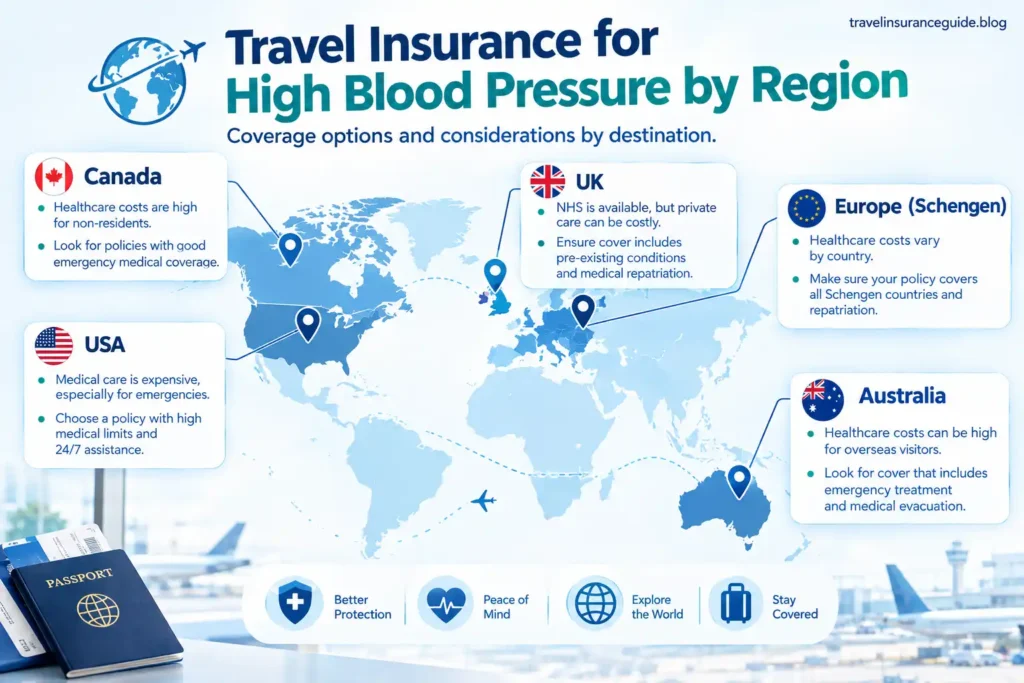
USA
Common searches include:
- Travel insurance for high blood pressure USA
- Hypertension travel insurance USA
Important considerations:
- Overseas healthcare costs can be very high
- Medicare may have limited international coverage
- Emergency medical protection is important
UK
Common searches include:
- High blood pressure travel insurance UK
- Hypertension holiday insurance
Important considerations:
- NHS coverage does not automatically cover all overseas medical expenses
- Travelers should declare medical conditions before purchasing insurance
Canada
Common searches include:
- Travel insurance hypertension Canada
Important considerations:
- Provincial healthcare plans may have limitations outside Canada
- Emergency medical coverage is important for international trips
Australia
Common searches include:
- Travel insurance high blood pressure Australia
Important considerations:
- Overseas medical costs
- Long-distance travel planning
- Remote destination risks
Europe and Schengen Countries
Travelers may need:
- Schengen-compliant insurance
- Medical coverage documentation
- Emergency assistance
Important considerations:
- Visa requirements
- Healthcare agreements between countries
Common Mistakes to Avoid
Not Declaring High Blood Pressure
One of the biggest mistakes is hiding a medical condition.
If a claim relates to an undisclosed condition, the insurer may refuse payment.
Choosing Only the Cheapest Policy
Low-cost insurance may have:
- Lower coverage limits
- More exclusions
- Less medical support
Ignoring Medication Requirements
Before traveling:
- Carry enough medication
- Keep prescriptions available
- Check destination rules
Not Checking Healthcare Access
Research:
- Hospitals near your destination
- Emergency numbers
- Local healthcare systems
Travel Safety Checklist for People With Hypertension
Before leaving:
✓ Discuss travel plans with your doctor
✓ Carry medication in original packaging
✓ Keep prescriptions available
✓ Store emergency contacts
✓ Check destination healthcare facilities
✓ Confirm insurance coverage details
✓ Save emergency assistance numbers
Entity Glossary
Hypertension: A medical condition where blood pressure remains higher than recommended levels.
Pre-existing Condition: A health condition that existed before purchasing an insurance policy.
Medical Underwriting: The process insurers use to evaluate health information and determine coverage.
Travel Medical Insurance: Insurance designed to cover healthcare emergencies during travel.
Medical Evacuation: Emergency transportation to suitable medical care.
Repatriation: Returning a traveler to their home country for medical reasons.
Insurance Premium: The amount paid to purchase an insurance policy.
Coverage Limit: The maximum amount an insurer may pay for covered expenses.
AI Overview Trigger Q&A
Can I get travel insurance with high blood pressure?
Yes. Many people with hypertension can get travel insurance, but insurers usually assess medical history, medication, blood pressure control, destination, and whether the condition is declared.
Do I need to declare high blood pressure on travel insurance?
Yes. Hypertension is usually considered a pre-existing condition, so travelers should disclose it when applying for coverage.
Does high blood pressure increase travel insurance cost?
It can. Premiums depend on factors such as age, health history, medication, destination, and coverage requirements.
Can I travel abroad while taking blood pressure medication?
Many people travel while taking hypertension medication. Carry prescriptions, keep medicine available, and check destination regulations before departure.
Does travel insurance cover high blood pressure emergencies?
Some policies may cover emergencies related to hypertension if the condition was declared and accepted by the insurer.
FAQs
Yes, many people with high blood pressure can get travel insurance. Availability depends on medical history, treatment, age, destination, and insurer assessment.
Yes, most travel insurers consider hypertension a pre-existing medical condition.
Yes. Declaring your condition helps ensure your policy accurately reflects your medical situation.
It may increase premiums depending on your health profile and the level of coverage required.
Yes. Many insurers offer options for older travelers with hypertension and other medical conditions.
Some insurers may ask medical questions or require additional information depending on your circumstances.
Seek medical assistance immediately. Whether related expenses are covered depends on your policy terms and whether your condition was declared.
Many people with controlled hypertension travel internationally. Planning, medication management, and appropriate insurance are important.
Conclusion
Having high blood pressure does not automatically prevent you from traveling or getting travel insurance. The key is choosing a policy that understands your medical situation and provides appropriate protection.
Before purchasing hypertension travel cover:
- Declare your condition honestly
- Compare providers that cover pre-existing conditions
- Review medical coverage and exclusions
- Carry medication and medical documents
- Choose protection based on your destination and health needs
The right preparation allows travelers with hypertension to explore the world with greater confidence while reducing the risk of unexpected healthcare costs abroad.
About the Author

Rahib Naqvi researches and writes about travel insurance for UK and international travellers, focusing on older travellers, pre-existing medical conditions and policy comparison. This website provides general educational information and does not sell insurance or provide personalised financial or medical advice. Policy terms and eligibility can change, so readers should confirm current information directly with the insurer before buying.